生信分析工作室
Bulk RNA-seq
GEO
limma
GO/GSEA
骨质疏松

GSE56815 单核细胞转录组实战(上)

从 GEO 矩阵到差异通路,一份能交付的 R 流程

12 分钟阅读
GSE56815 单核细胞转录组实战(上)

骨质疏松(osteoporosis)是绝经后女性最常见的代谢性骨病。循环单核细胞是破骨细胞的前体,并且释放调节骨代谢的因子,因此被认为是研究骨质疏松机制的最便捷外周窗口之一。GSE56815(HG-U133A 微阵列)一次性测了 80 例白人女性的外周血单核细胞,2×2 设计 —— 高/低骨密度 × 绝经前/后,每格 20 例 —— 非常适合用来演示 bulk 转录组的全套常规分析。本篇先把前 4 步走完:读入与注释、质控可视化、limma 差异分析、GO/GSEA 通路富集。下一篇会接着写 WGCNA、免疫信号打分、机器学习筛 biomarker。

第一步 · 读入矩阵 + 表型构建 + 探针注释

我们直接用 GEOquery 解析本地 series matrix,避免重复下载。表达矩阵自动检测对数与否,然后做 quantile normalization;表型从 Sample_title 文本里正则抽 BMD 与绝经状态;最后用 hgu133a.db 把 Affymetrix 探针映射到 SYMBOL,对重复基因取均值最高的那条探针。

R · 01_preprocess.R
gset <- getGEO(filename = DATA_FILE, AnnotGPL = FALSE, getGPL = FALSE)
expr <- normalizeBetweenArrays(log2(exprs(gset)), method = "quantile")

# phenotype from sample title (e.g. "postmonopausal high BMD")
bmd  <- ifelse(grepl("high BMD", title, TRUE), "High", "Low")
meno <- ifelse(grepl("postm",    title, TRUE), "Post", "Pre")

# Affymetrix probe -> SYMBOL (hgu133a.db), keep best probe per gene
map <- AnnotationDbi::select(hgu133a.db, keys = rownames(expr),
                             columns = "SYMBOL", keytype = "PROBEID")

第二步 · QC 全套:分布、PCA、相关性、聚类

微阵列数据上机批次效应可能很大,QC 必须先看清四件事:

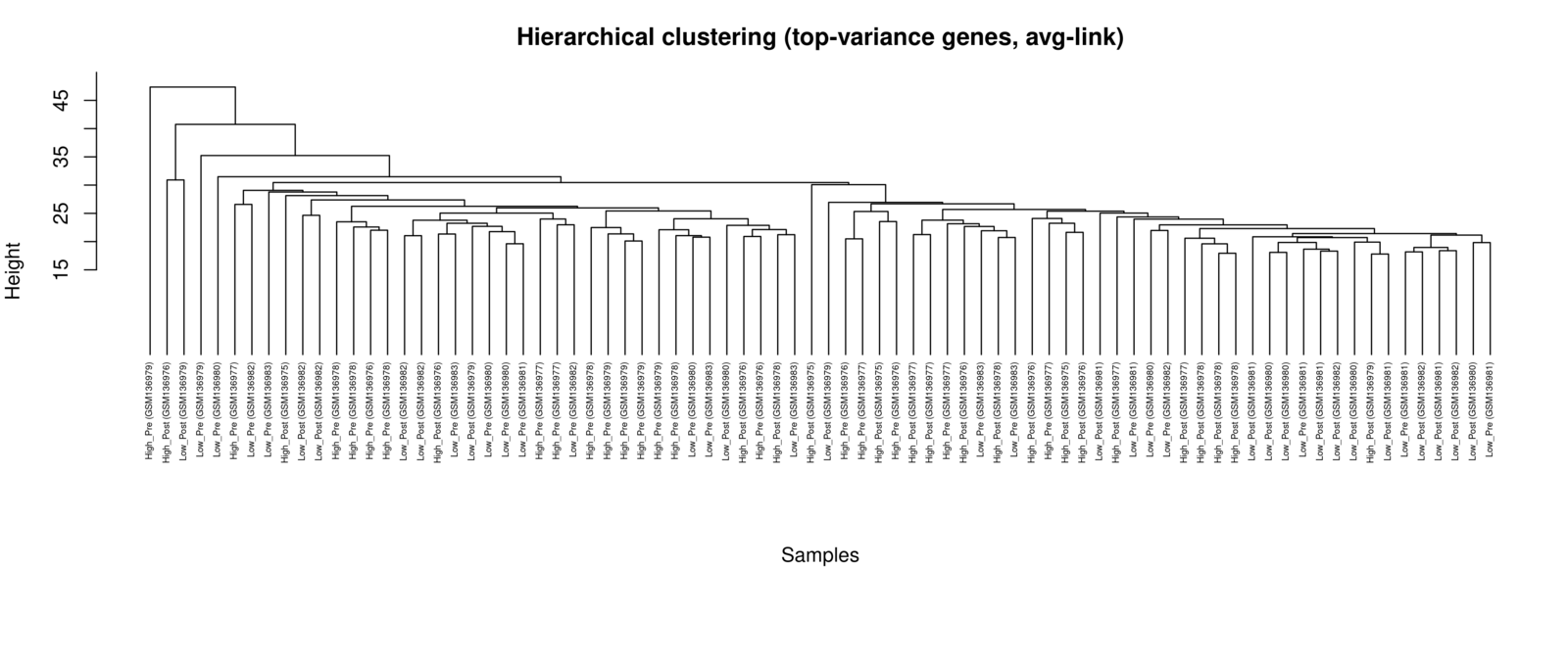
(1)分布是否对齐;(2)PCA 上分组结构强弱;(3)样本间相关性矩阵是否有离群点;(4)聚类树有没有不该聚到一起的样本。下面的图按这四个角度依次给出。

2.1 分布对齐:箱线图 + 密度图
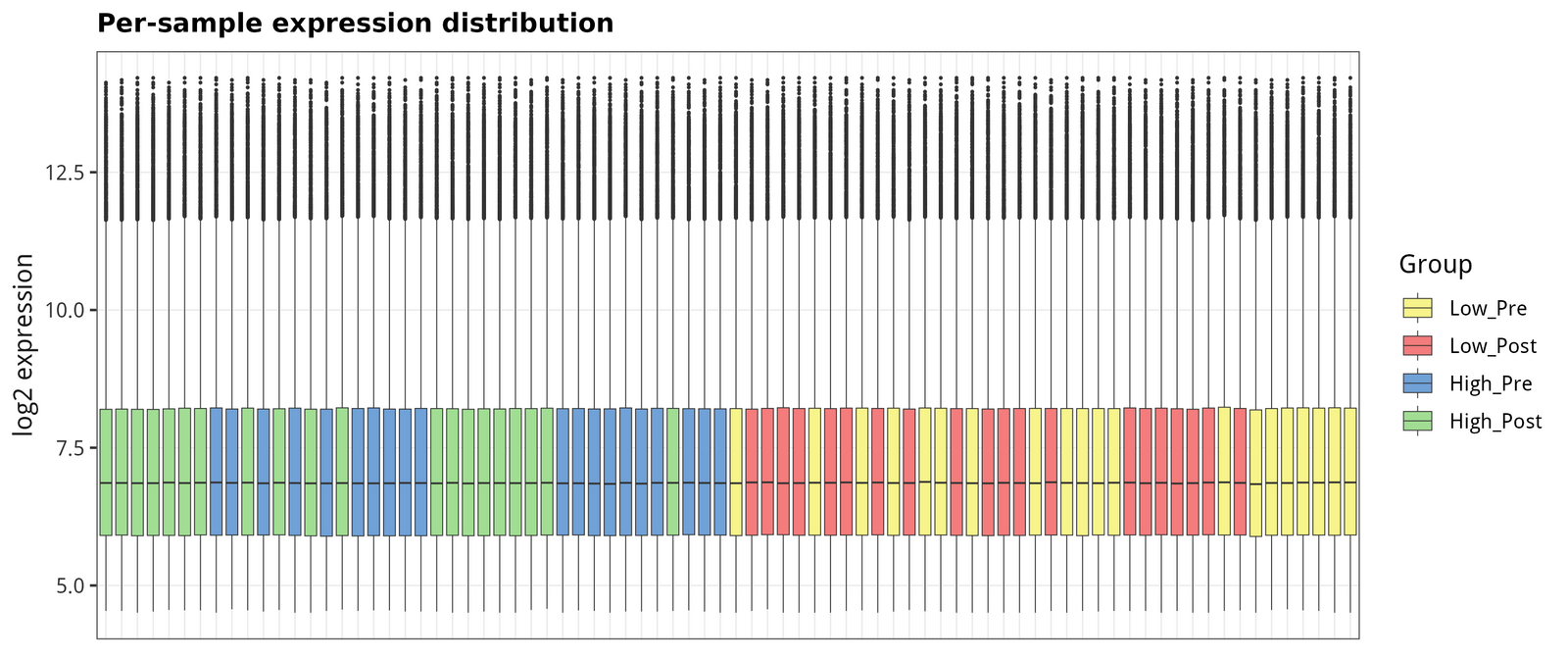
Per-sample expression boxplots after quantile normalization. All 80 samples are aligned, no obvious outlier requires rem
Per-sample expression boxplots after quantile normalization. All 80 samples are aligned, no obvious outlier requires removal.
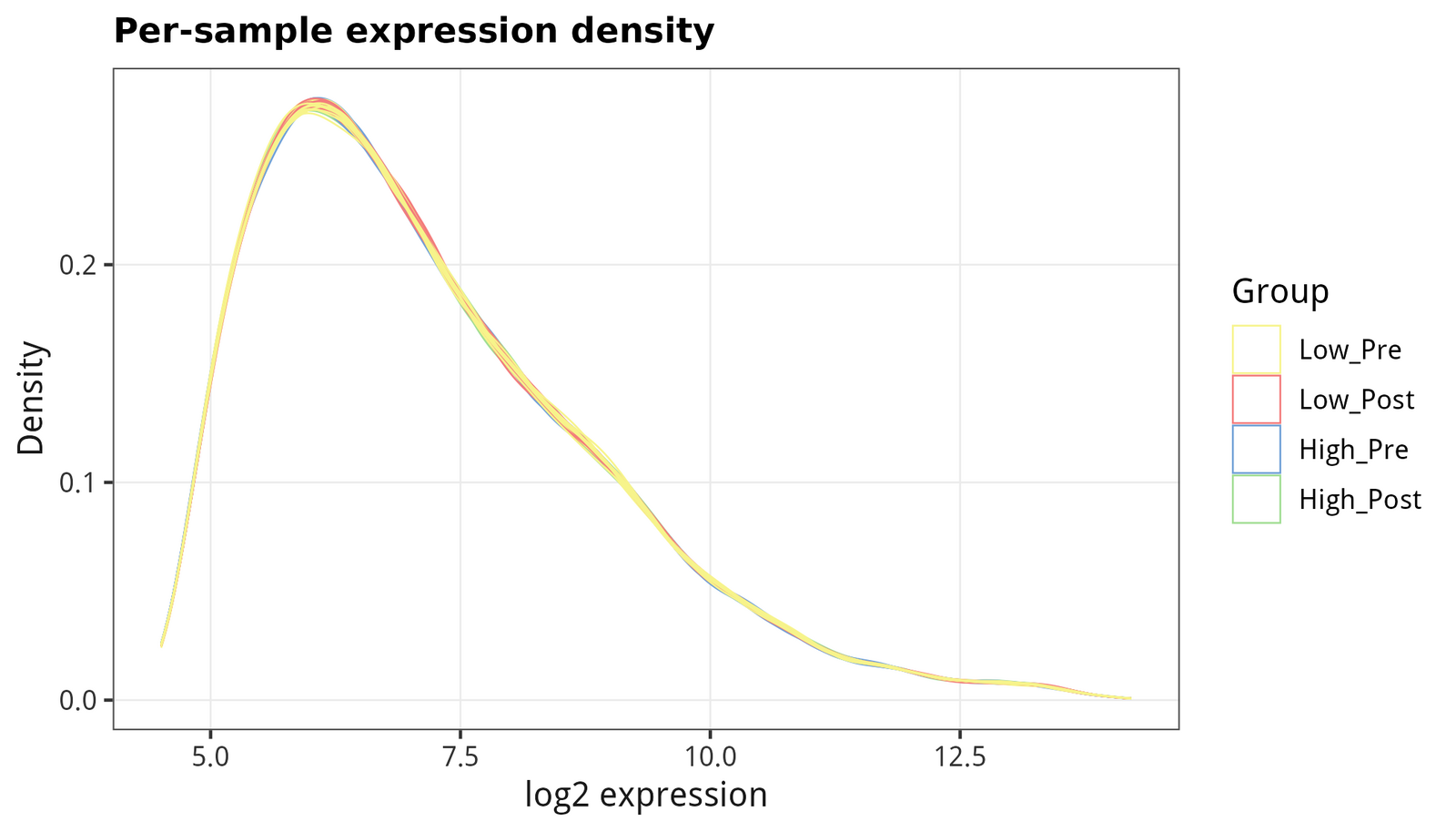
Per-sample density curves overlap tightly across all four groups, indicating consistent dynamic range.

2.2 PCA:BMD / 绝经 / 联合分组

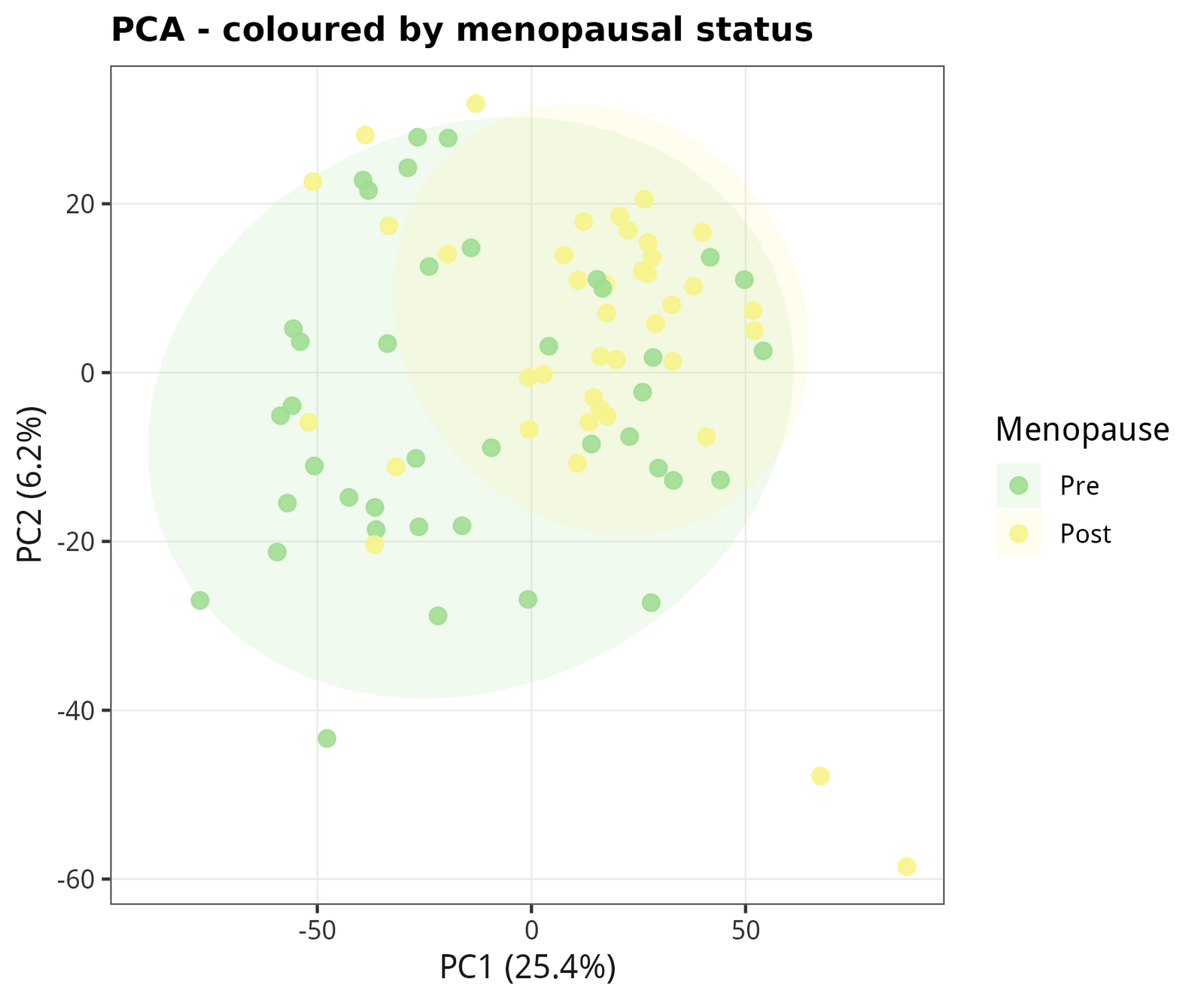
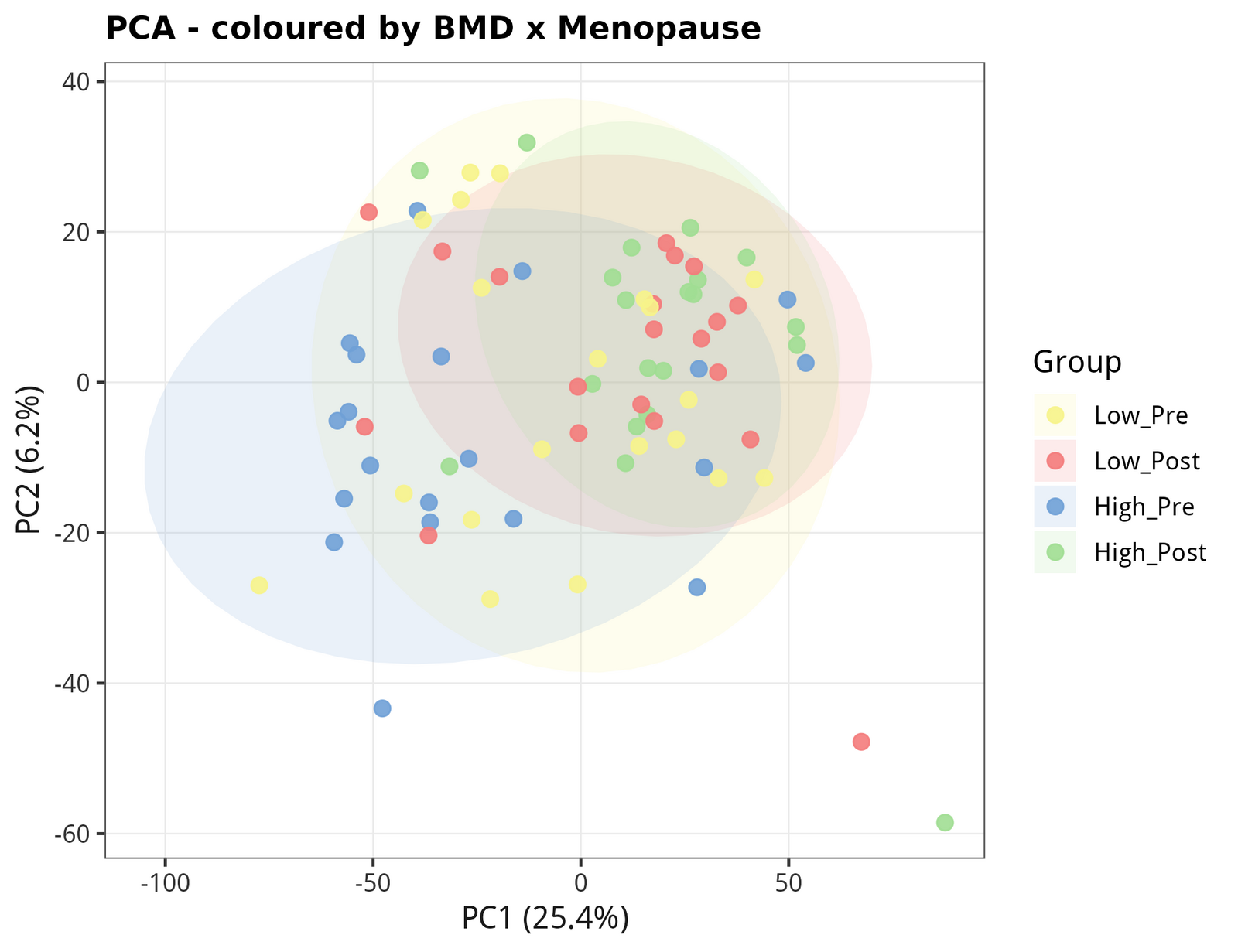
在 top-5000 高方差基因上做 PCA。需要重点关注的是:BMD 这个我们最关心的变量在前两个主成分上是否能区分。
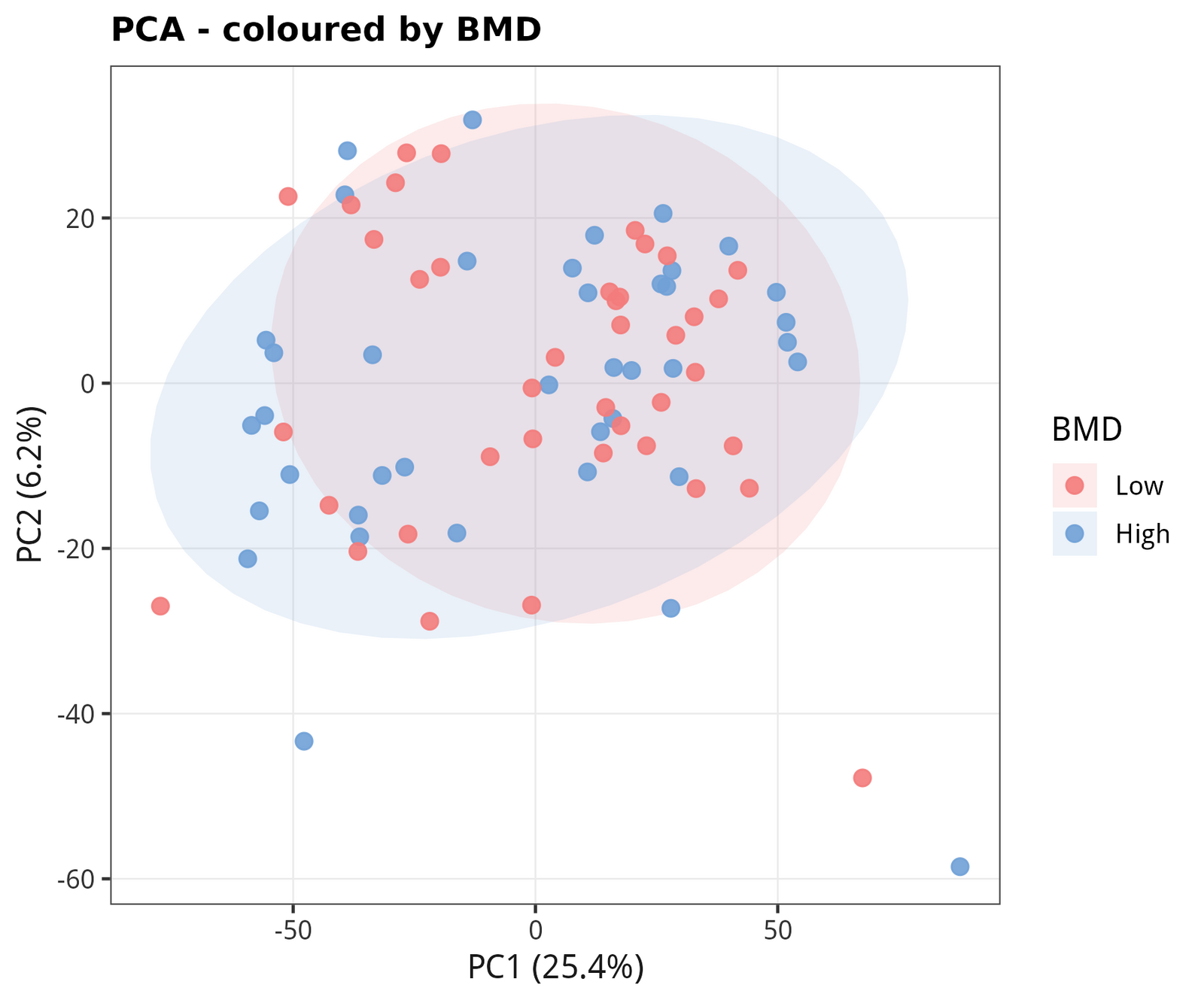
PCA coloured by BMD. The two clouds overlap heavily — BMD signal is subtle in monocyte transcriptome.
PCA coloured by menopausal status. Pre vs Post separates slightly more clearly than BMD does.
PCA coloured by the 2×2 group label.

2.3 样本相关性 + 层次聚类

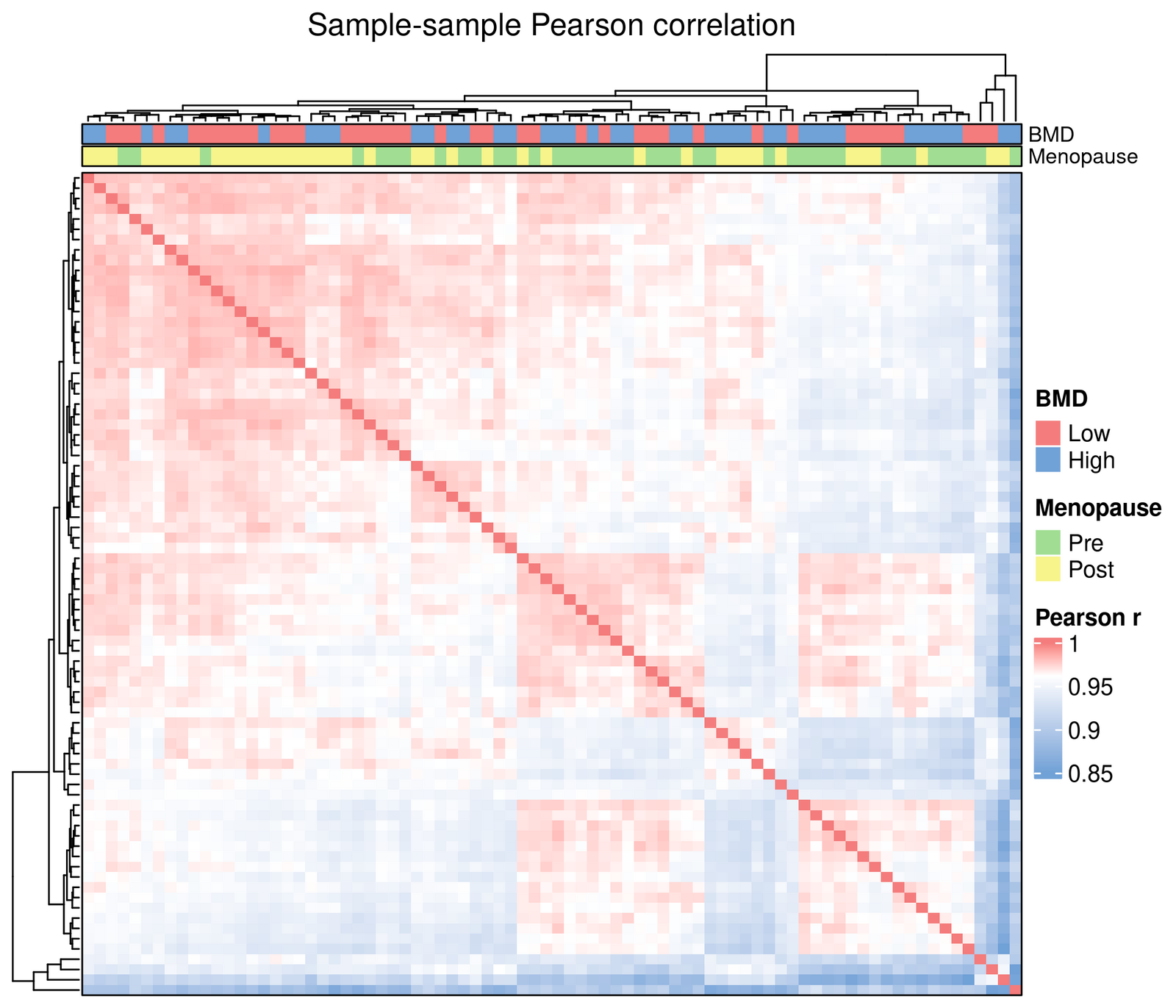
Sample-sample Pearson correlation heatmap with BMD / Menopause annotations. The full matrix is uniformly high (>0.94), n
Sample-sample Pearson correlation heatmap with BMD / Menopause annotations. The full matrix is uniformly high (>0.94), no sample needs to be excluded.
Hierarchical clustering (average linkage). Branches do not split cleanly by BMD — consistent with the PCA.

第三步 · limma 2×2 差异分析:五个对比一次出

用 ~ 0 + Group 的 cell-means 设计加上 makeContrasts,可以一次拿到五个生物学问题的答案:

R · 03_deg.R
design <- model.matrix(~ 0 + Group, data = pheno)
cont <- makeContrasts(
  BMD_main       = (High_Pre + High_Post)/2 - (Low_Pre + Low_Post)/2,
  Menopause_main = (Low_Post + High_Post)/2 - (Low_Pre + High_Pre)/2,
  Interaction    = (High_Post - Low_Post) - (High_Pre - Low_Pre),
  HighvsLow_Pre  = High_Pre  - Low_Pre,
  HighvsLow_Post = High_Post - Low_Post,
  levels = design)
fit2 <- eBayes(contrasts.fit(lmFit(expr, design), cont), trend = TRUE)

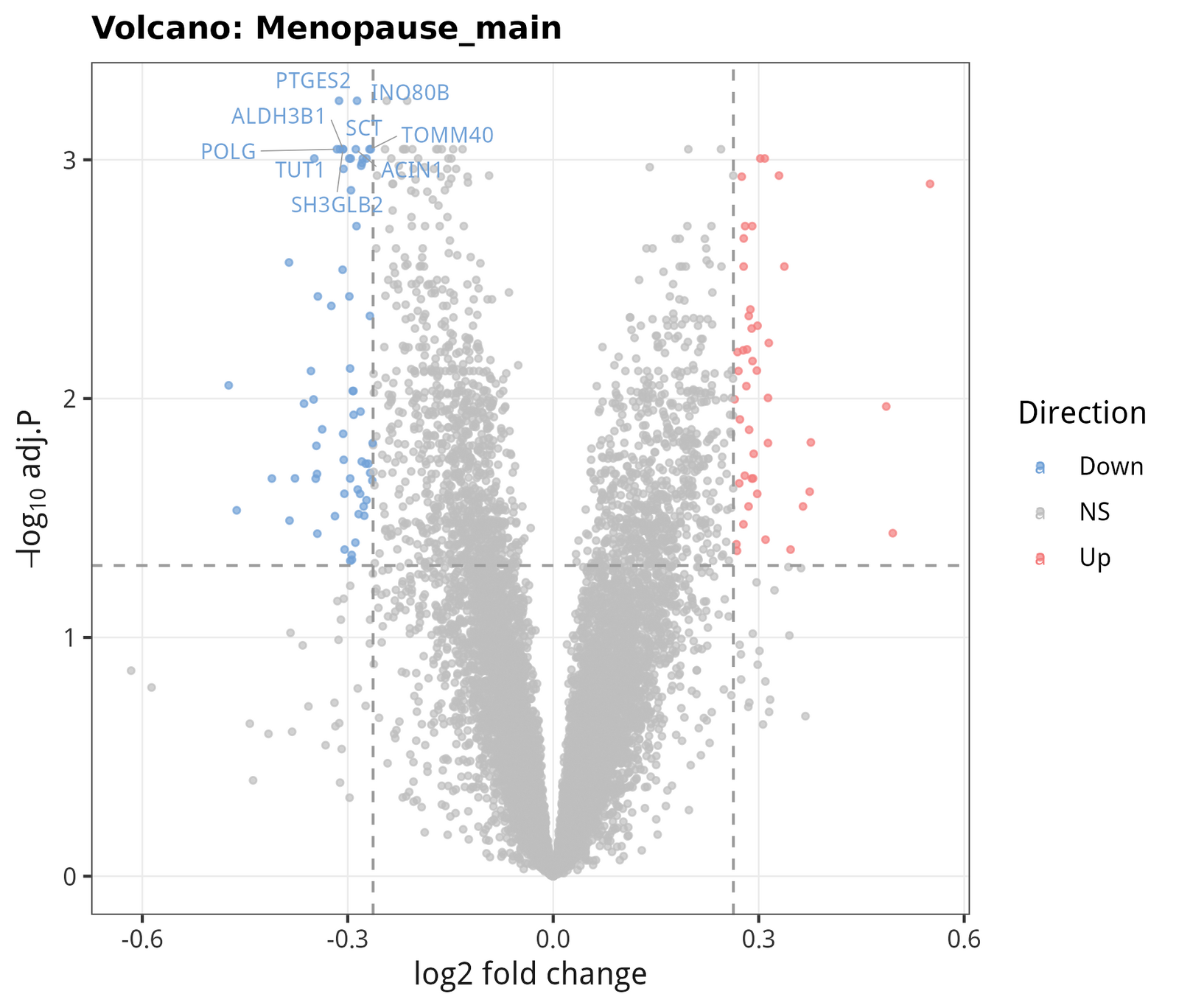
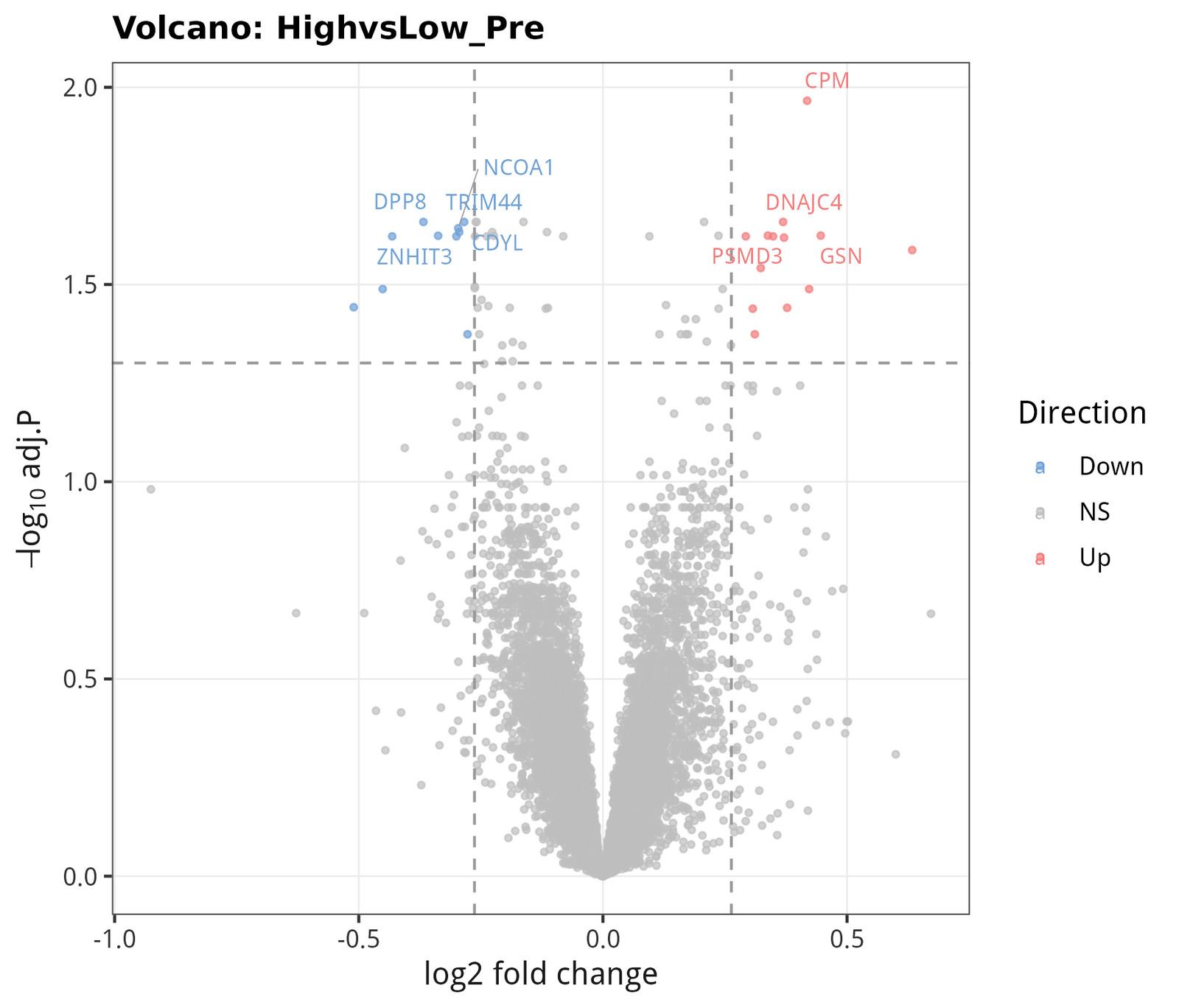
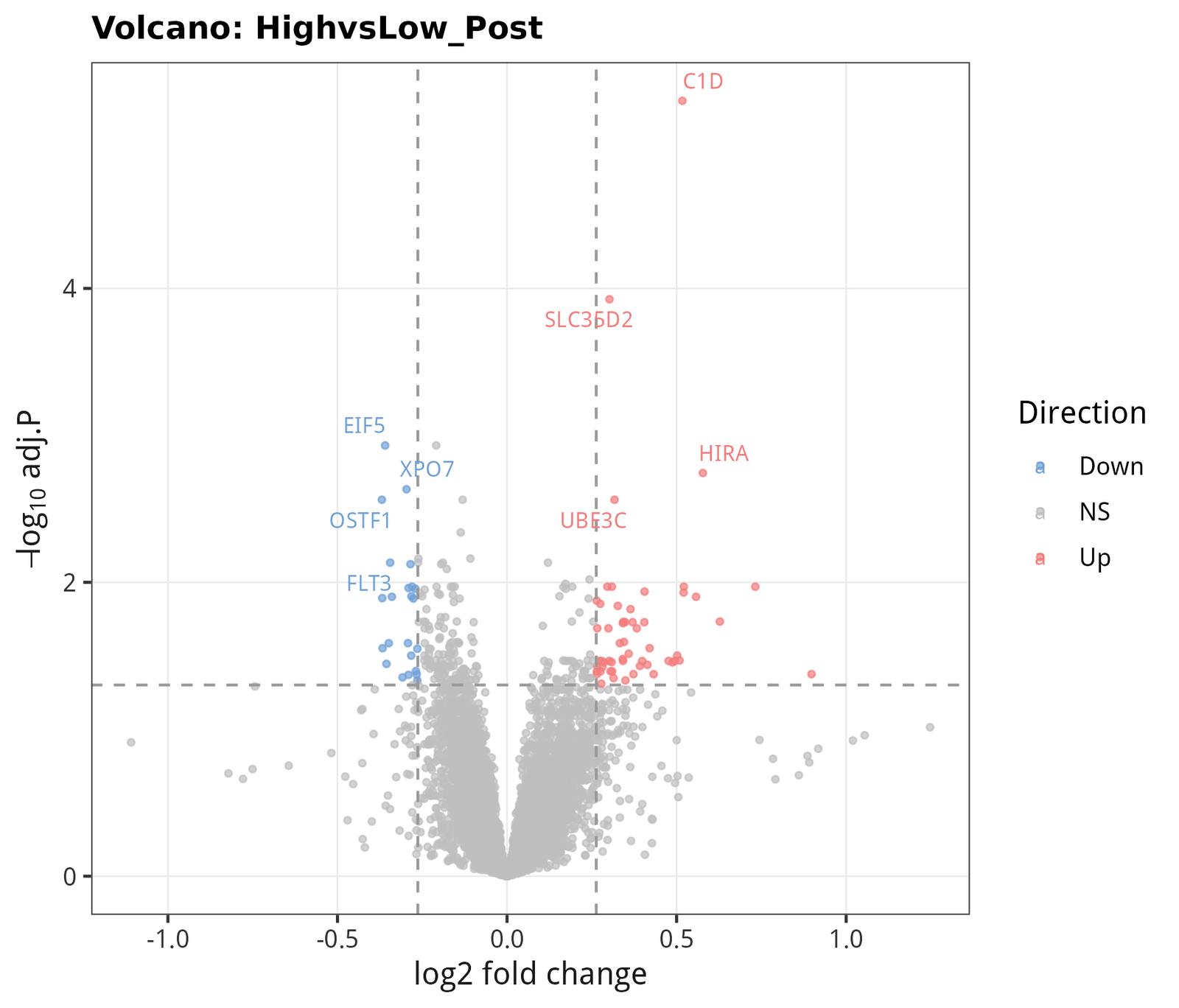
阈值取 adj.P < 0.05 且 |log2FC| > log2(1.2),五个对比的 DEG 数量如下:

3.1 五张火山图
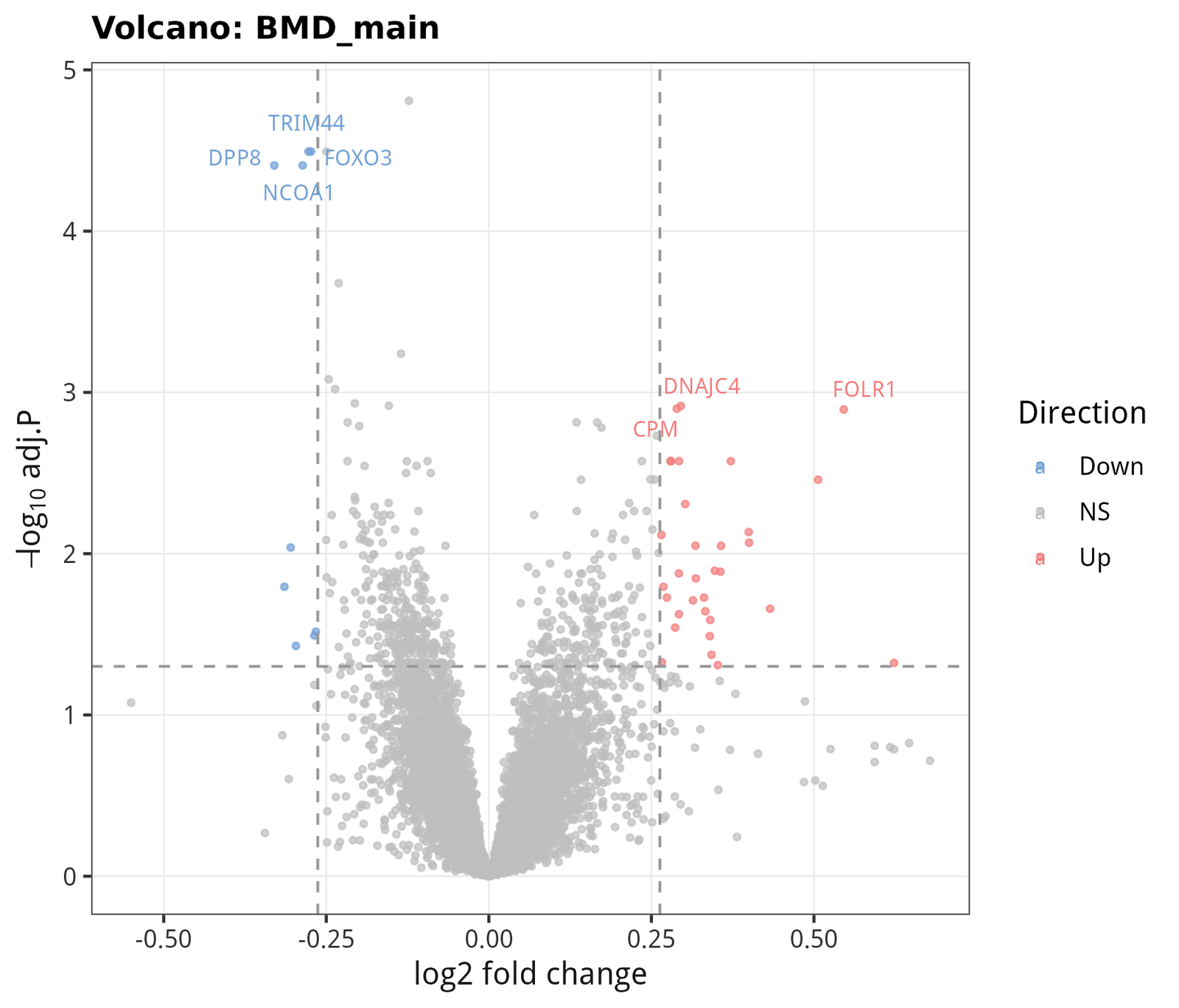
Volcano — BMD main effect (High vs Low, both menopausal states).
Volcano — Menopausal main effect (Post vs Pre).
Volcano — High vs Low BMD, premenopausal only.
Volcano — High vs Low BMD, postmenopausal only (by far the largest gene set).
Volcano — Interaction (BMD × Menopause). Only 1 gene survives, so the two main effects are largely additive.

3.2 Top BMD DEG 的样本聚类热图

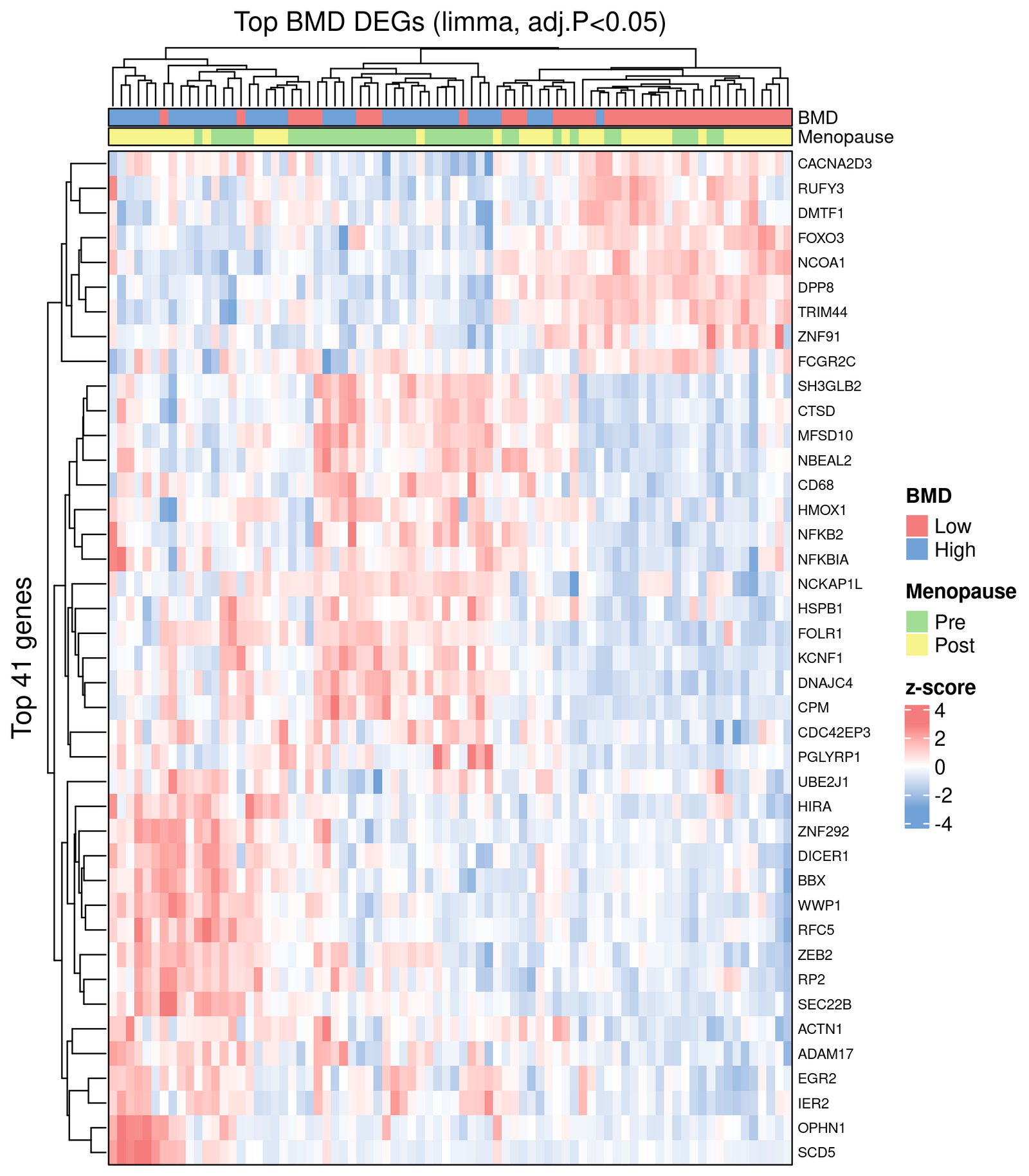
Top BMD DEGs (limma BMD_main, adj.P<0.05) shown as z-score with BMD and Menopause annotations.

第四步 · 功能富集:GO + GSEA

GO 用 clusterProfiler 的 enrichGO 做超几何检验;同时把 limma 输出的 logFC 排成基因列表,跑 gseGO(BP)和 MSigDB Hallmark 的 GSEA,兼顾『DEG 集合』和『全谱表达趋势』两种视角。

R · 04_enrichment.R
ego <- enrichGO(gene = entrez_deg, OrgDb = org.Hs.eg.db, ont = "BP",
                pAdjustMethod = "BH", pvalueCutoff = 0.05, readable = TRUE,
                universe = entrez_all)

# GSEA on full ranked logFC list
glist <- sort(setNames(tt$logFC, tt$ENTREZID), decreasing = TRUE)
gsea_h <- GSEA(glist, TERM2GENE = hallmark_t2g, pvalueCutoff = 0.25)

4.1 GO 三本体气泡图(BP / MF / CC)
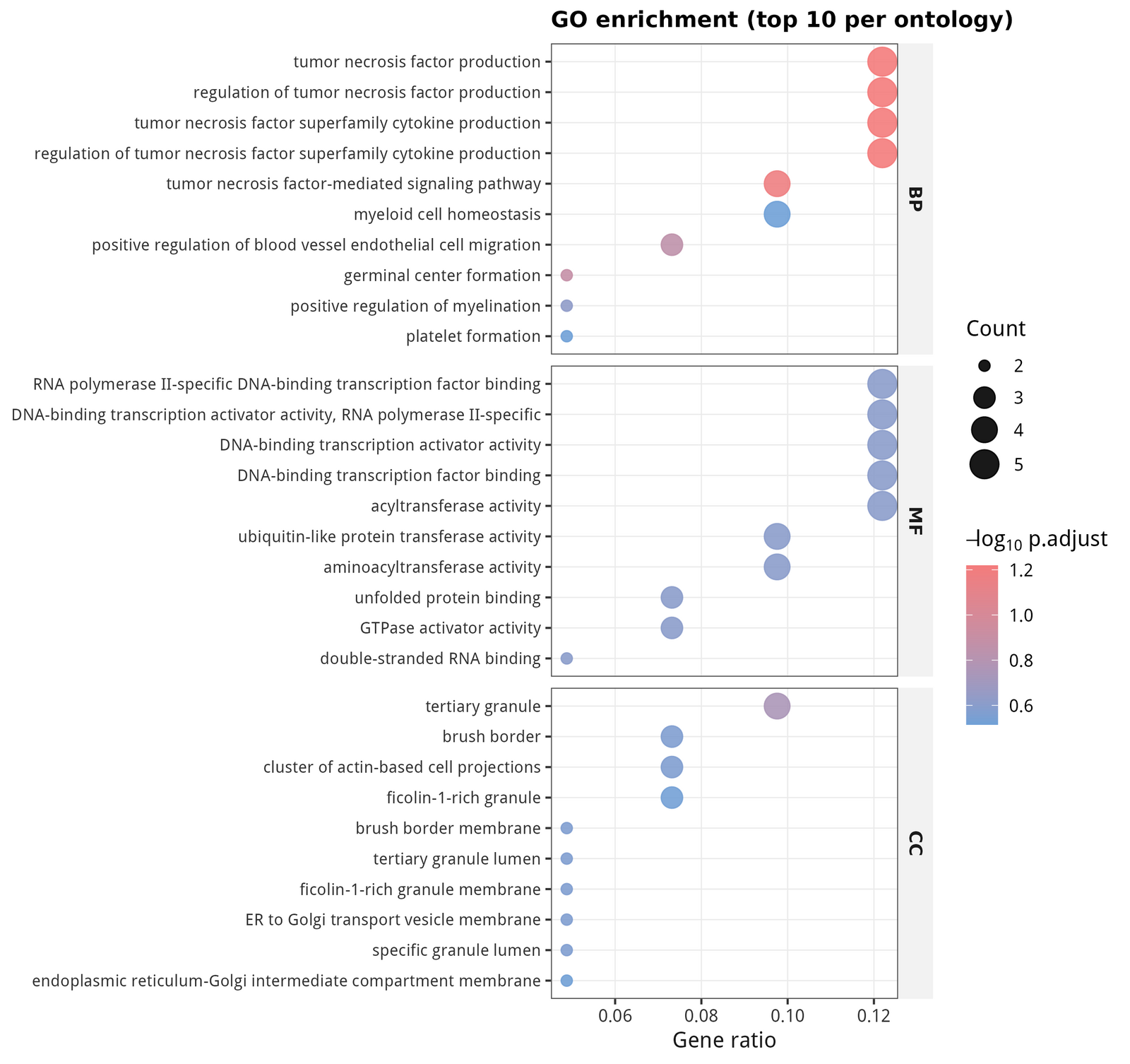
GO enrichment — top 10 terms per ontology. BP is dominated by TNF / cytokine production.

4.2 GSEA · GO BP 山脊图

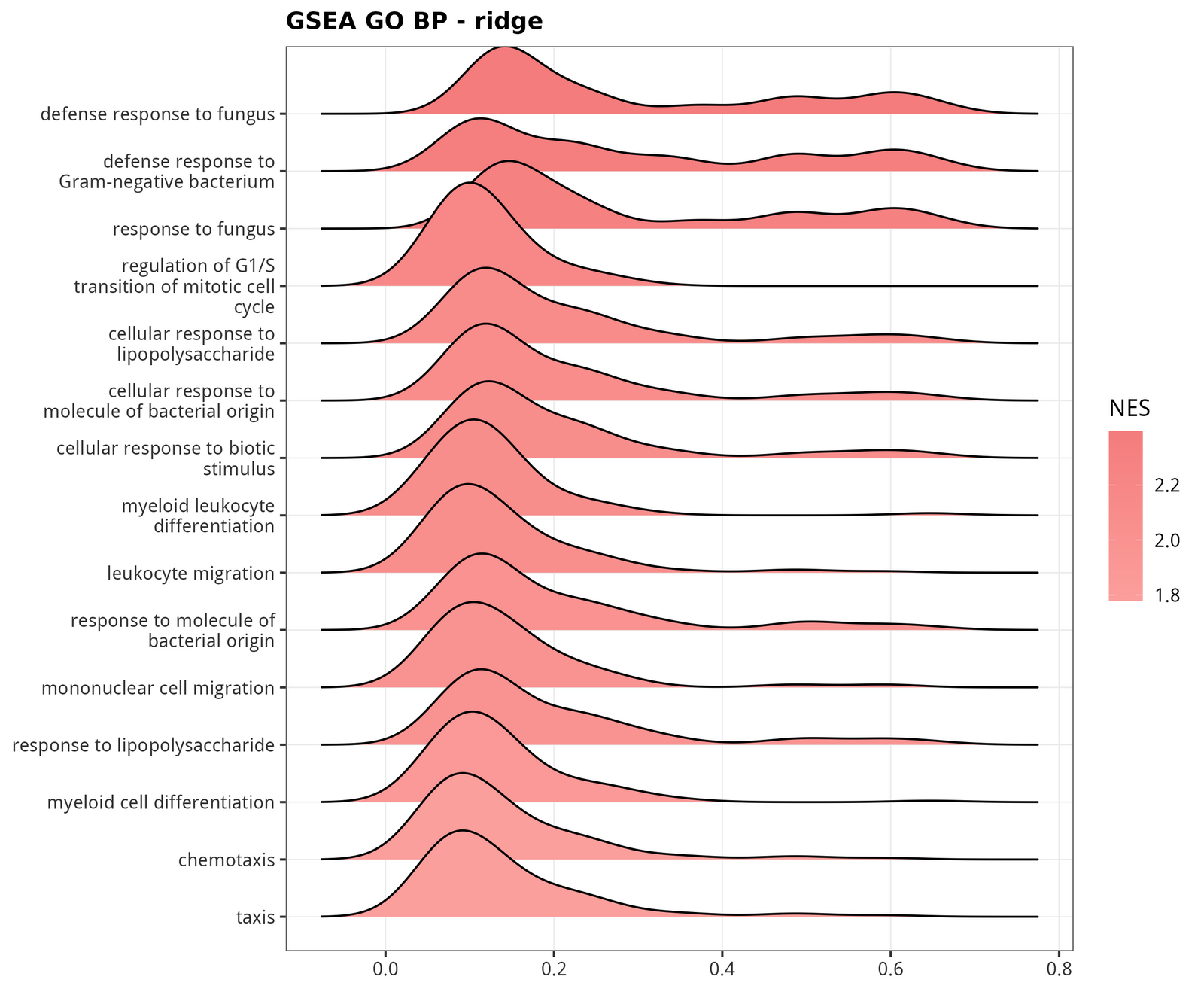
GSEA on GO BP, top pathways shown as ridges coloured by NES.

4.3 GSEA · Hallmark 通路条形图

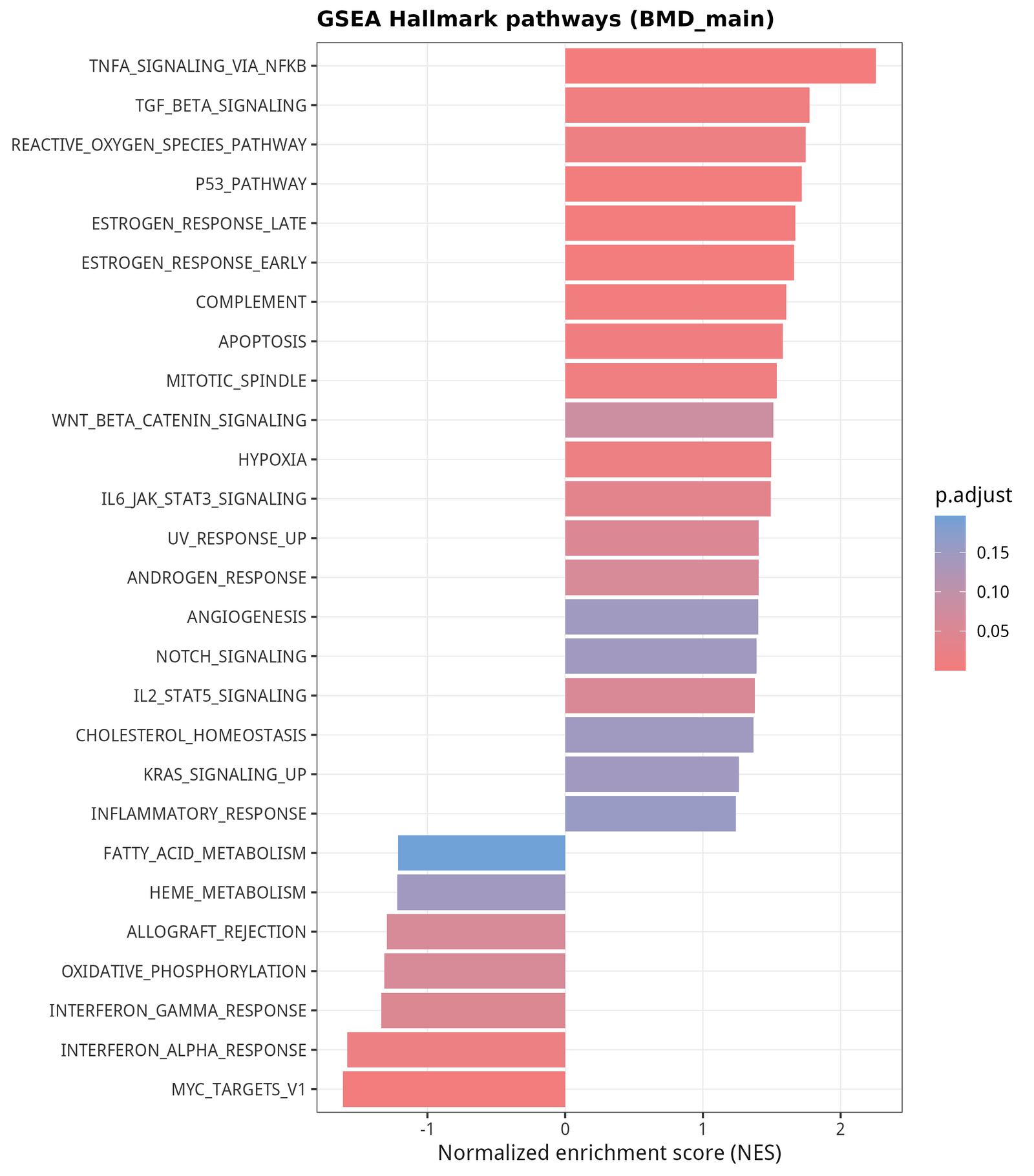
Hallmark GSEA bar plot. TNFα signaling via NF-κB shows the strongest positive NES.

上篇小结 + 下篇预告

到这里上篇完成了从原始矩阵到通路解释的闭环:BMD 在外周单核细胞上的转录组效应虽然总体偏弱,但分层后绝经后差异显著放大,且高度聚焦于 TNFα/NF-κB 轴 —— 这是一条与破骨细胞分化、骨重塑息息相关的经典通路。

下一篇会接着写 WGCNA 共表达模块、免疫与单核细胞亚群信号打分、以及 LASSO + 随机森林 + SVM-RFE 三重共识筛 biomarker + ROC 验证。

本文相关服务

Bulk 转录组分析

想把类似的分析跑在你自己的数据上?可以直接看服务详情或发起咨询。

更多案例